Health insurance for the German student visa: proof for embassy, visa application and arrival
- Care College: from €27.50/month — language course & Studienkolleg, embassy-recognised
- Care Visa Protect: from €0.85/day — short bridge cover for pre-arrival / visa-collection window (min €8.50, not a standalone D-visa solution)
- DAK-Gesundheit: from €135.52/month — statutory student cover after enrolment, age <30 (M10)
- Care Student: from €101.54/month — €101.54 for ages 12–29, €127.60 for 30–39; recognised private student cover for eligible 30+, PhD, GKV-exempt cases
Sources: § 5 Abs. 1 Nr. 1 AufenthG + § 2 Abs. 3 AufenthG (secured livelihood incl. adequate health cover) · § 5 Abs. 1 Nr. 9 SGB V (statutory student insurance) · § 8 SGB V (GKV exemption) · § 199a SGB V / M10 electronic student notification · German Federal Foreign Office · Make it in Germany · German Missions UK
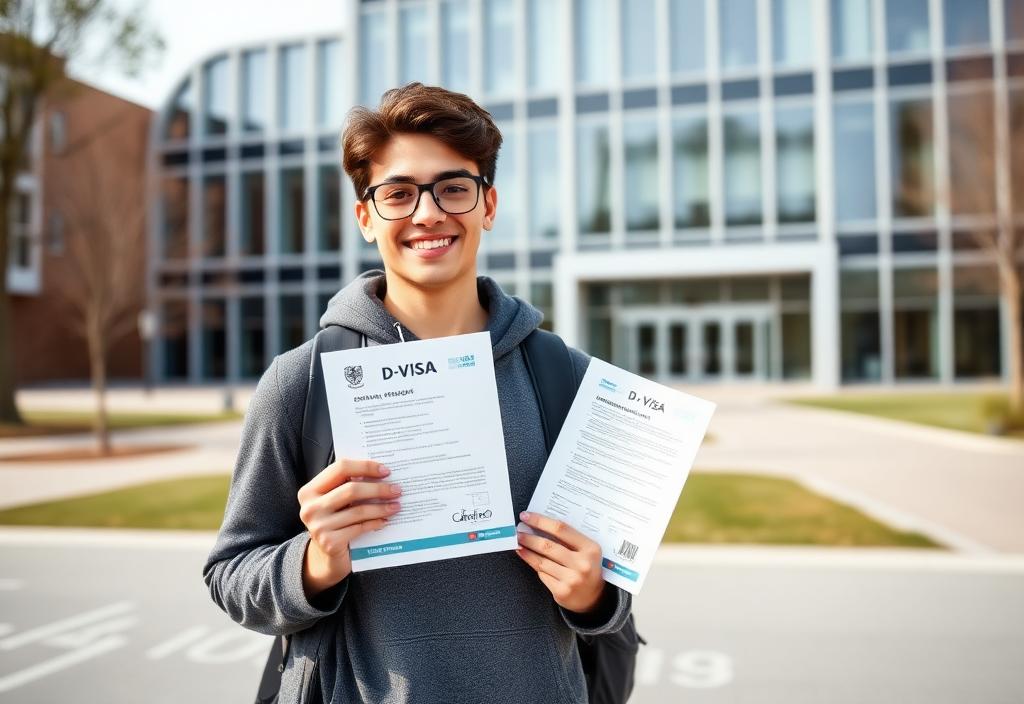
Almost every non-EU student applying for a German national category D student visa must show proof of health insurance — at the visa appointment, before visa collection at the German embassy or consulate, or at the latest from the first day of arrival in Germany. German Missions in the UK explicitly state that simple tourist travel insurance is not sufficient for any national D visa application: cover must be comparable to German statutory health insurance, valid in Germany, and aligned with the planned study phase (language course, Studienkolleg, bachelor, master, PhD). Some embassies may still request short-term incoming or travel cover for the period before long-term student insurance starts.
For the language-course and Studienkolleg phase before official matriculation, Care College from €27.50/month is the standard recognised tariff. The short window between visa collection and arrival is bridged by short-term incoming cover such as Care Visa Protect from €0.85/day — a bridge product, not a standalone long-stay D-visa solution. Once you matriculate at a German university, the M10 electronic notification kicks in: under 30 → DAK-Gesundheit from €135.52/month; 30+, PhD or GKV-exempt → Care Student from €101.54/month.
Below: what each German embassy checklist actually asks for, the difference between visa proof and university enrolment proof, country-by-country guidance for India, Pakistan, China, Iran and Egypt, and the recognised tariff for every step of your study journey.
Student Coverage
DAK-Gesundheit or HanseMerkur student options
Enrollment Proof
M10 notification for eligible university enrollment flows
Visa & University Documents
Receive confirmation for visa or enrollment steps where applicable
Over 10,000 policies issued · Since 2009
Pick the recognised tariff for your visa phase — embassy, arrival or university enrolment.
Health insurance for the German student visa: what do you actually need?
Quick answer: For a German national D student visa you need health-insurance cover that is valid in Germany, comparable to German statutory insurance, and aligned with the date you arrive — not the date you enrol. Embassies typically ask for the certificate at the visa appointment or before visa collection. Travel insurance is not accepted.
Foreign students applying for a German student visa usually need proof of valid health insurance before entering Germany. The same proof becomes relevant again at several touchpoints: the embassy or consulate appointment, visa collection, the first day of arrival, the residence-permit application at the local Ausländerbehörde, and finally university enrolment (Immatrikulation).
The German Federal Government portal Make it in Germany states that health insurance is required from the first day of arrival in Germany, and that proof must be available at the latest when collecting the visa from the German embassy. German Missions in the UK additionally clarify that for any long-stay national D visa, cover must be at the level of German statutory insurance — and that travel insurance is explicitly not sufficient.
In practice this means three different "phases" of cover, each matched to a recognised Care Concept tariff: Care Visa Protect for the short window between visa collection and arrival, Care College for language course and Studienkolleg, DAK-Gesundheit (or Care Student for 30+/PhD) once you matriculate.
Four mistakes that delay a German student visa
Quick answer: "Why was my student-visa application rejected?" — most non-EU students stumble on one of four points: travel insurance instead of long-stay cover, an insurance start date set after arrival, no German-language certificate, or a home-country policy not recognised in Germany. The four tariffs above remove each of these risks by default.
Avoid the mistakes that can delay your application
Schengen proof missing?
For short Schengen stays, choose insurance that meets the €30,000 minimum-coverage requirement.
Short stay or longer stay?
Care Visa Protect fits many 1–92 day Schengen visits; Care Economy may fit longer or more flexible stays.
Wrong insurance can cost time
Before your embassy appointment, check that the proof matches your visa type, dates and destination.
Multiple entries planned?
If you travel more than once, check the multiple-entry option and the annual day limit before applying.
What happens when the embassy rejects your insurance proof
One wrong insurance choice can cost you money, time and your application deadline
A medical incident can become expensive fast — but the wrong certificate can also delay your visa, enrollment, residence permit or work start.
🏥
€500–€1,500
Emergency doctor visit
One urgent doctor or emergency-room visit can already create a painful bill — before tests, medication or follow-up treatment are added.
🏨
€2,000–€10,000+
Hospital treatment
If observation, surgery, overnight stay or specialist treatment is needed, costs can quickly move from hundreds to thousands of euros.
🛂
1 wrong certificate
Visa appointment at risk
Wrong dates, missing coverage details, unclear validity area or missing repatriation wording can delay your documents exactly when time matters.
- Wrong or incomplete proof can delay your visa, enrollment or authority process.
- Cheap home-country policies may miss the exact coverage, dates or repatriation wording required.
- The cheapest policy can become expensive if it is the wrong proof for your situation.
Before you apply, check: coverage amount, validity dates, destination area and repatriation cover.
Visa-collection windows are tight — secure the certificate first
Why act before the visa appointment
Visa appointments can be hard to reschedule. Missing or unsuitable insurance proof can create avoidable delay exactly when time matters.
Appointment pressure
If your documents are incomplete, you may need extra time to prepare corrected proof.
Certificate must fit
Check coverage amount, validity dates, destination area and repatriation wording before the appointment.
PDF proof after application
Several online tariffs provide a PDF certificate after successful application.
Avoid last-minute panic
Choose the right insurance before submitting your visa file, not after a document problem appears.
Do German embassies require proof of health insurance?
Quick answer: Yes — but the exact moment differs by mission. Some German embassies (for example in Islamabad, Tehran, New Delhi or Cairo) ask for the certificate already at the visa appointment; others request it before the visa is issued or collected. Always check the checklist of the responsible German mission for your country before booking the appointment.
The general requirement — health insurance comparable to German statutory cover, valid for Germany, with a coverage start no later than your day of arrival — is identical everywhere. What differs is when the embassy or consulate wants to physically see the certificate and the document language they accept (some missions ask for an English or German certificate, while local-language travel-insurance papers are routinely rejected for the D visa).
Care Concept and HanseMerkur certificates are issued instantly in English and German and are designed for visa, embassy and authority proof — including missions handling student-visa appointments for India, Pakistan, China, Iran, Egypt, Bangladesh, Morocco, Tunisia, Vietnam, Syria, Turkey, Ukraine and Russia (commonly via TLScontact, VFS, Gerry's, iDATA or BLS document partners). Final acceptance always depends on the responsible German embassy, consulate or foreigners' authority.
Health insurance from the first day in Germany
Quick answer: Your insurance must already be active when you land — not when you collect your residence permit. The recognised tariff depends on the phase of study you arrive into: language course, Studienkolleg, degree start, or PhD/post-enrolment.
| Situation on arrival | What you need to know | Recognised tariff |
|---|---|---|
| You arrive before university enrolment | Statutory student insurance has not started yet — you need private/incoming cover until matriculation | Care College from €27.50/month |
| You enter for a language course | Statutory student insurance is not available — language students are not §-5 SGB V eligible | Care College or language-school guide |
| You enter for Studienkolleg | Same as language course — private student or incoming cover is needed until you matriculate at the partner university | Studienkolleg guide · Care College |
| You start a degree later in the semester | An M10 electronic notification from a recognised insurer is needed for matriculation | DAK-Gesundheit (<30) or Care Student (30+/PhD) |
| You apply for a residence permit at the Ausländerbehörde | Valid health insurance is checked again under § 5 AufenthG — your certificate must still be active on the appointment date | Same tariff as your study phase (continuity is what counts) |
Study in Germany also confirms that health insurance proof is required when enrolling at university and again when applying for the student residence permit — the same certificate must cover both.
Visa health insurance vs. university enrolment insurance
Quick answer: Visa proof and university enrolment proof are connected but not identical. Visa proof is a paper/PDF certificate the embassy accepts; enrolment proof is an electronic M10 notification the insurer sends directly to the university registrar (Studierendensekretariat). One tariff family handles both — the certificate evolves with your status.
For the embassy and the residence-permit appointment you need a certificate that names the insured, lists the coverage period and confirms the cover is valid for Germany. For matriculation, the university expects an M10 electronic notification — a digital data exchange transmitted directly from the insurer to the registrar's office, completed in seconds, no paper certificate involved.
With statutory insurance such as DAK-Gesundheit (under 30), the M10 notification is sent directly to the university registrar. With private student cover such as Care Student (30+, PhD, GKV-exempt), the registrar typically receives an exemption-route status notification (Befreiung from § 5 SGB V) so the same electronic data exchange completes — paper forms are no longer accepted by German universities. See the dedicated guide on health insurance for university enrolment and the statutory student-insurance overview.
Health insurance for students from India, Pakistan, China and other non-EU countries
Quick answer: Many German student-visa applicants come from non-EU countries — India, Pakistan, China, Iran, Egypt, Bangladesh, Morocco, Tunisia, Vietnam, Syria, Turkey, Ukraine and Russia. The local German embassy or consulate may ask for health-insurance proof during the visa application, before visa collection or before entry into Germany. The exact checklist differs by country, but the core requirement is identical: cover valid for Germany, starting no later than your day of arrival, matched to your study phase.
Health insurance for Indian students in Germany
Indian students applying for a German student visa typically book the appointment through VFS Global on behalf of the German missions in New Delhi, Mumbai, Chennai, Kolkata or Bengaluru. The health-insurance certificate is commonly requested during the student-visa process or before the visa is issued — the insurance should already be active or scheduled to start from your day of arrival, and it must be suitable for the planned study phase.
If you arrive for a German language course (typically 6–12 months) before starting a bachelor or master degree, statutory student insurance is not yet available; Care College from €27.50/month is the recognised tariff for that phase. Once you matriculate at the German university, the M10 notification kicks in: under 30 → DAK-Gesundheit (statutory student insurance), 30+ / PhD → Care Student.
Health insurance for Pakistani students in Germany
Pakistani students apply through the German embassy in Islamabad or the consulate in Karachi, with appointment slots typically managed via Gerry's. The student-visa checklist consistently lists health-insurance proof — and the certificate must be a German-style cover, not a Pakistani travel-insurance policy. Simple tourist travel insurance alone is usually not sufficient for a long-stay D visa.
For Pakistani students arriving for a Studienkolleg or DSH/TestDaF language course before degree start, Care College covers the embassy and arrival phase. After matriculation, the M10 confirmation is sent directly to the university by DAK-Gesundheit (under 30) or Care Student (30+ / PhD / exempt). Combine with a German blocked account from €4.90/month to satisfy the funds requirement of the visa file.
Health insurance for Chinese students in Germany
Chinese students typically pass through APS (Akademische Prüfstelle) before booking the German embassy or consulate appointment in Beijing, Shanghai, Guangzhou, Chengdu or Shenyang. The health-insurance certificate is typically checked at the visa interview — a Care Concept or HanseMerkur certificate, issued in English and German, is the recognised type of proof for these missions.
Many Chinese students arrive for a one- or two-semester language course before the actual degree starts. Statutory student insurance only kicks in at matriculation, so the language-course phase is covered by Care College; the degree phase is covered by DAK-Gesundheit (under 30) or Care Student (30+ / PhD).
Health insurance for Iranian students in Germany
Iranian students apply at the German embassy in Tehran. Because appointment and processing times can be long, Iranian students should prepare the insurance certificate early — the certificate language (English/German), the insured name (transliteration must match the passport), and the coverage period are all checked carefully.
Many Iranian students start with a language course or Studienkolleg before degree admission; Care College covers that phase. PhD candidates and post-doctoral researchers — common for Iranian applicants — typically use Care Student or, for longer stays with a family, Care Expatriate.
Health insurance for Egyptian students in Germany
Egyptian students apply at the German embassy in Cairo or the consulate in Alexandria, with TLScontact handling appointment logistics. Egyptian student-visa files routinely include the health-insurance certificate from the start — the embassy expects a clear coverage period, the policyholder name in Latin script (matching the passport), and explicit confirmation that the cover is valid in Germany.
Pre-degree language course or Studienkolleg → Care College. After matriculation → DAK-Gesundheit (under 30) or Care Student (30+ / PhD / GKV-exempt).
Other origin countries — Bangladesh, Morocco, Tunisia, Vietnam, Syria, Turkey, Ukraine, Russia
The same logic applies to other non-EU origin countries: an embassy-recognised certificate (Care Visa Protect for the pre-arrival window, Care College for the language/Studienkolleg phase) and an M10-capable tariff (DAK-Gesundheit or Care Student) once you matriculate. The table below maps the search phrases students from each country typically use.
| Country | Common embassy / centre | Recognised tariff path |
|---|---|---|
| Bangladesh | German embassy Dhaka (VFS) | Care College → DAK-Gesundheit / Care Student |
| Morocco | German embassy Rabat / consulate Casablanca | Care College → DAK-Gesundheit / Care Student |
| Tunisia | German embassy Tunis | Care College → DAK-Gesundheit / Care Student |
| Vietnam | German embassy Hanoi / consulate HCMC (TLScontact) | Care College → DAK-Gesundheit / Care Student |
| Syria | German missions in Beirut / Amman / Istanbul | Care College → Care Student / Care Expatriate |
| Turkey | German embassy Ankara / consulates Istanbul, Izmir, Antalya (iDATA) | Care College → DAK-Gesundheit / Care Student |
| Ukraine | German missions Kyiv / temporary processing in EU | Care College → DAK-Gesundheit / Care Student |
| Russia | German embassy Moscow / consulates St. Petersburg, Yekaterinburg, Novosibirsk | Care College → DAK-Gesundheit / Care Student |
Does the German embassy checklist differ by country?
Quick answer: Yes — at the procedural level. The general requirement (German-statutory-equivalent cover, valid for Germany, active from arrival) is the same everywhere, but the document checklist, certificate language requirements and timing of the proof differ between the German embassies in India, Pakistan, China, Iran, Egypt and other non-EU posts. Always verify the local checklist before the appointment.
Example differences: New Delhi and Islamabad usually accept the certificate at the visa appointment via VFS / Gerry's; Tehran often requests it earlier in the file; Beijing, Shanghai and Guangzhou check it during the interview with the visa officer; Cairo and Alexandria handle it through TLScontact. The Care Concept and HanseMerkur certificates we recommend are issued in English and German on the same PDF — accepted at every post we are aware of.
From booking to embassy certificate — in 3 steps
Schengen-ready in 3 steps
Proof of insurance for Schengen visa applications, including the €30,000 minimum-coverage requirement.
-
Pick the right plan
Care Visa Protect for short Schengen stays · Care Economy for the Opportunity Card or longer visitor stays.
-
Apply online
Enter passport, travel dates and destination. For Care Visa Protect, purchase before entry when required.
-
Submit your proof
Receive the PDF certificate after successful online application and submit it with your visa or authority documents.
What non-EU students from India, Pakistan, China, Iran and Egypt say about Care College, Care Visa Protect, DAK-Gesundheit and Care Student for the German student visa — embassy-accepted PDF certificate, M10 e-notification to the university registrar, and continuous cover from visa collection to matriculation
“My biggest worry was that the embassy wouldn't accept the insurance.
The proof was accepted immediately — no questions asked.
That saved me a lot of stress.”

Georges
Cameroon
“I needed proof of insurance urgently for my visa appointment.
The confirmation arrived within minutes by email.
Everything worked first time at the embassy.”

Olga
Russia
“Found the best solution and best service for health insurance for foreign visitors and guests in Germany.
Fast, simple and affordable.
Highly recommended!”

Michael
Germany
“The online sign-up was done in just a few minutes.
When I actually had to see a doctor, the billing went smoothly.
I was really covered — not just on paper.”

Yunhee
Australia
Now choose your plan
Recommended tariffs by study phase
Care College
from only €27.50 / month (coverage up to 5 years)
For language schools, Studienkolleg, DSH, continuing education, visiting researchers & educational stays
- Proof of insurance for visas & immigration authorities quickly available (PDF)
- Affordable health insurance from €27.50 / month
- Doctor, hospital, prescription medication & dental treatment coverage
- For educational stays in Germany or the EU/Schengen Area — except Austria
- Suitable for language students, Studienkolleg, DSH, continuing education & visiting researchers
- Coverage up to 5 years – less renewal stress
- 3 plan levels available: Basic, Comfort & Premium
- 24/7 assistance + digital insurance card
- Coverage term: 1 month to 5 years · entry age up to 40
- Reputable insurance carrier
Why Care College?
For foreign nationals with an educational stay who need affordable health insurance and proof of coverage for authorities — suitable for language school, Studienkolleg, DSH, continuing education or visiting researchers.
Why a 5-year coverage term?
More planning security during training, language courses or study preparation: less renewal stress and a lower risk of a coverage gap.
- 🏛️ HanseMerkur Insurance Group Hamburg – Advigon Insurance AG
- 📄 Instant proof of insurance for visas & immigration authorities (PDF)
- 🔒 Doctor, clinic, dental treatment & repatriation coverage
- 🏷️ From €27.50 / month · coverage up to 5 years
→ Complete the application, receive your instant PDF, submit your proof
Care Visa Protect
from only €0.85 / day (1–92 days possible)
For Schengen visas, tourists, family visits & business travel
- Proof of insurance for visas & immigration authorities quickly available (PDF)
- Meets Schengen visa insurance requirements
- Affordable coverage from €0.85/day (minimum premium applies)
- Doctor, hospital, prescription medication & dental emergency coverage
- For Germany, Austria, the EU/Schengen Area, Liechtenstein or Switzerland
- Ideal for short stays, family visits, tourists & business travelers
- Multiple-visa option: several trips up to a total of 92 days/year
- Must be purchased before entry
- Age-based rates: from €0.85/day up to age 64 · from €2.60/day for ages 65–74
- Coverage term: 1–92 days · entry age 0–74
Why Care Visa Protect?
For foreign visitors with a Schengen visa who need fast, affordable proof of insurance for an embassy, visa office or immigration authority — suitable for tourists, family visits and short business trips.
Why a 92-day coverage term?
Ideal for typical short stays and Schengen trips: enough coverage for a visit, vacation or business trip — without buying long-term insurance.
- 🏛️ HanseMerkur Travel Insurance AG, Hamburg
- 📄 Instant proof of insurance for visas & immigration authorities (PDF)
- 🔒 Doctor, clinic, dental emergency & repatriation coverage
- 🏷️ From €0.85 / day · coverage up to 92 days
→ Complete the application, receive your instant PDF, submit your proof
DAK-Gesundheit Students
from €145.52 / month
(effectively from €135.52 with DAK Garantietarif 120 possible)
For international students in Germany up to age 29
- Accepted for university enrollment – electronic M10 notification
- Visa confirmation directly after application
- Statutory health insurance + mandatory long-term care insurance included
- Doctor, dentist, hospital, pharmacy & prescription medication coverage
- Health insurance card for medical treatment in Germany
- Apply online from your home country – no German address required
- Save €120 per year with DAK Garantietarif 120 possible
- Alternative: DAK Fit & Travel with additional benefits
- 2026 contributions: from €145.52 · effectively from €135.52 possible
- Reputable statutory health insurance provider
Why DAK-Gesundheit?
For international students in Germany who need statutory health insurance for a visa, university and enrollment — including M10 notification and a health insurance card.
Why statutory student health insurance?
More security for your studies and enrollment: full statutory health coverage, electronic notification to the university and clear acceptance for enrollment.
- 🏛️ DAK-Gesundheit
- 📄 M10 notification + visa confirmation after application
- 🔒 Doctor, dentist, clinic, pharmacy & prescription medication
- 🏷️ From €145.52 / month · effectively from €135.52 possible
→ Complete the application, receive visa confirmation, secure your M10 notification
Care Student
from €101.54 / month (coverage up to 5 years)
For international students in Germany: bachelor's, master's, doctoral studies & eligible university enrollment cases
- Accepted for university enrollment – electronic M10 notification
- Health insurance + mandatory long-term care insurance from €101.54/month
- Save at least €50/month compared with statutory student health insurance
- For bachelor's, master's, doctoral studies & eligible university enrollment flows
- Private-patient status: free choice of doctor, often faster appointments
- Doctor, hospital, prescription medication & dental treatment coverage
- Support with exemption from statutory health insurance
- Recognized by universities and immigration authorities
- Coverage term up to 5 years · entry age 12–39
- Reputable insurance carrier
Why Care Student?
For international students in Germany who need private health insurance for enrollment, M10 notification and proof of coverage for authorities — with strong benefits and potential savings compared with statutory health insurance.
Why a 5-year coverage term?
More planning security during your studies: less renewal stress and a lower risk of a coverage gap during a bachelor's, master's, doctoral program or eligible university enrollment case.
- 🏛️ HanseMerkur Insurance AG
- 📄 M10 notification + proof for universities & immigration authorities
- 🔒 Doctor, clinic, dental treatment & prescription medication
- 🏷️ From €101.54 / month · coverage up to 5 years
→ Complete the application, secure your M10 notification, prepare for enrollment
Need a blocked account too? German blocked account (Sperrkonto) for the student visa from €4.90/month satisfies the funds requirement of the visa file. New here? Start with the foreign-student health-insurance overview.
Care College — full pricing for the visa & pre-enrolment phase
Quick answer: Care College starts at €27.50/month for students up to age 29 (Basic, months 1–24) and at €33.50/month from age 30. The maximum monthly premium is €99 (Premium, age 30+, month 25 onwards). Recognised for the German student visa, language course and Studienkolleg.
| Care College |
Basic
|
BestsellerComfort
|
Premium
|
|---|---|---|---|
|
Deductible / yr
120,–
|
Deductible / yr
0,–
|
Deductible / yr
0,–
|
|
| Months 1–24 monthup to 29 yrs (€ / month) | 27,50 | 34,– | 48,– |
| Months 1–24 monthfrom 30 yrs (€ / month) | 33,50 | 50,– | 75,– |
| From 25th monthup to 29 yrs (€ / month) | 49,50 | 57,– | 73,– |
| From 25th monthfrom 30 yrs (€ / month) | 55,– | 73,– | 99,– |
All prices per month/person in euros. Deductible applies per insurance year. Maximum entry age 40. As of 2026.
Care Visa Protect — pre-arrival cover from €0.85/day
Quick answer: Care Visa Protect costs from €0.85/day with a minimum premium of €8.50. Covers ages 0–74 for 1–92 days, conforms to EU Regulation 810/2009 for Schengen-style cover, and is the standard bridge between visa collection and the day you actually arrive in Germany.
| Care Visa Protect | Daily premium | Multiple Visa (annual contract) |
|---|---|---|
| up to age 64 | €0.85/day | €110/year |
| 65 – 74 years | €2.60/day | €215/year |
Prices per person. Minimum premium €8.50 per trip. Maximum benefit €50,000 (well above the Schengen minimum of €30,000). Deductible €0. Must be purchased before travel. As of 2026.
DAK-Gesundheit — statutory student insurance after enrolment
Quick answer: DAK-Gesundheit student insurance starts at approx. €135.52/month (with-kid bracket €145.52/month, childless from age 23 €150.65/month). The premium already includes long-term care insurance and is the statutory student tariff for under-30s.
| Insured benefits |
DAK-Gesundheit
|
BestsellerDAK + Garantietarif 120
|
DAK + Fit & Travel
|
|---|---|---|---|
| up to age 23 | €145.52 / month | €145.52€135.52 / month | €145.52 / month |
| up to age 29, childless | €150.65 / month | €150.65€140.65 / month | €150.65 / month |
| up to age 29, with 1 child | €145.52 / month | €145.52€135.52 / month | €145.52 / month |
| Bonus / extra benefit | — | saves €120/year | free for under 39 |
Contribution incl. long-term care insurance (childless from age 23). Garantietarif 120: €120 contribution refund per year if no claims are filed. Fit & Travel: free for insured persons under 39. Entry age up to 29, term for the duration of studies (max. 14 specialist semesters / age 30). As of 2026.
Care Student — from €101.54/month for 30+, PhD and GKV-exempt students
Quick answer: Care Student costs €101.54/month all-in for ages 12–29 (CCS health €35 + PVN supplement €58.04 + Pflegeversicherung €8.50) and €127.60/month for ages 30–39. Covers ages 12–39 for up to 60 months — the standard recognised private student tariff for eligible students over 30, PhD candidates and GKV-exempt cases under § 8 SGB V (final eligibility depends on age and status).
| Care Student |
Health insurance
for students
|
Compulsory long-term care
for students
|
Total |
|---|---|---|---|
| 12–29 years | 69,62 € / month | 31,92 € / month | 101,54 € / month |
| 30–39 years | 95,68 € / month | 31,92 € / month | 127,60 € / month |
All prices per month/person in euros. Health insurance deductible: €300 per calendar year. Entry age 12–39, term up to 60 months. Premium guarantee for the full term. As of 2026.
Health insurance cost for a German student visa
Quick answer: "How much does student health insurance in Germany cost?" — short-term bridge cover starts from a daily rate, language-course / Studienkolleg insurance from a low monthly private tariff, and statutory student insurance after enrolment is more expensive but offers full public coverage. Students over 30, PhD candidates and GKV-exempt students typically use private student insurance instead.
Typical 2026 price points for international students in Germany: Care Visa Protect from €0.85/day (short bridge cover, min €8.50), Care College from €27.50/month (incoming health insurance for students Germany — language course and Studienkolleg), DAK-Gesundheit from €135.52/month (public / statutory health insurance for students in Germany under 30), and Care Student from €101.54/month (private health insurance for students in Germany — eligible 30+, PhD or GKV-exempt). The student health insurance Germany cost ladder therefore goes from "insurance before public health insurance starts Germany" (Care Visa Protect → Care College) up to "statutory health insurance for students in Germany" (DAK after matriculation).
Health insurance for PhD students applying for a German visa
Quick answer: PhD students do not always follow the same insurance route as bachelor's or master's students. The correct cover depends on whether the PhD candidate is enrolled as a student, employed by the university, funded by a scholarship, self-funded, or arriving as a researcher.
For the visa phase, the certificate must show valid health insurance for Germany from the first day of arrival. For university enrolment or residence-permit purposes, the required proof may differ depending on employment and enrolment status. Enrolled PhD students typically use Care Student; PhD candidates with a long-stay setup or family in Germany often choose Care Expatriate. Scholarship-funded researchers should confirm with the funder whether private student cover or statutory insurance is expected.
Health insurance for international students in Germany
Quick answer: International students in Germany need health insurance for several steps: the German student visa, entry into Germany, the residence permit, university enrolment and medical treatment during studies. Non-EU students usually start with visa-stage proof; EU students may rely on EHIC or obtain recognition from a German statutory health insurance provider.
Study in Germany confirms that international students need proof of health insurance both for university enrolment and for the residence-permit application. The same Care Concept or HanseMerkur certificate works for the embassy, the Ausländerbehörde and (via M10 / exemption route) the university registrar — making Care College and Care Student the standard incoming health insurance for students Germany uses for visa, language course, exchange semester and degree start.
What about EU students and EHIC?
Quick answer: EU students usually do not need a German student visa, but they still need valid health insurance for university enrolment. In many cases an EHIC card or home-country statutory insurance can be recognised by a German statutory health insurance provider. The university still needs an electronic status notification before enrolment.
For EU exchange students, an EHIC normally covers medically necessary treatment during the stay; for full degree enrolment, registering with a German statutory fund such as DAK-Gesundheit makes long-term enrolment, M10 and residence-related processes simpler. Non-EU students should still rely on the recognised tariffs above — Care College, DAK-Gesundheit or Care Student.
Frequently asked questions — German student visa health insurance
Frequently Asked Questions
Is travel insurance enough for a German student visa?
No — German Missions explicitly state that travel insurance is not sufficient for any long-stay national D visa. Care College, Care Visa Protect, DAK-Gesundheit and Care Student all meet that bar.
Do Indian students need health insurance for a German student visa?
Yes — Indian students applying through VFS Global on behalf of the German missions in New Delhi, Mumbai, Chennai, Kolkata or Bengaluru need a recognised health-insurance certificate in their visa file. The cover should be active from the day of arrival.
What insurance proof do Pakistani students need for the German embassy?
50/month (Care College) or €101. From €27. 54/month (Care Student under § 5 SGB V): Pakistani students applying at the German embassy in Islamabad or the consulate in Karachi (via Gerry's) need a German-statutory-equivalent certificate. Travel insurance from Pakistani providers is rejected for the D visa. Care College, Care Visa Protect or — once matriculated — DAK-Gesundheit and Care Student are the recognised options.
Can Chinese students use one insurance for visa and university enrolment?
The visa proof and the university M10 notification are different formats: the embassy needs a PDF certificate, the university registrar needs an electronic M10 data exchange. Sometimes. DAK-Gesundheit and Care Student handle both: the PDF for the embassy and residence permit, the M10 transmitted directly to the registrar at matriculation.
Do Iranian students need health insurance before entering Germany?
From €27.50/month (Care College) or €101.54/month (Care Student under § 5 SGB V): Yes. Students from Iran must show insurance proof during the visa process at the German embassy in Tehran and must be covered from their first day in Germany. Care College is the standard tariff for the pre-degree language-course / Studienkolleg phase; PhD candidates typically use Care Student or — for longer stays with family — Care Expatriate.
What insurance certificate should Egyptian students prepare for the German embassy?
50/month (Care College) or €101. From €27. 54/month (Care Student under § 5 SGB V): Egyptian students applying at the German embassy in Cairo or the consulate in Alexandria (TLScontact) should prepare a certificate showing the policyholder name in Latin script, the coverage period including the day of arrival, and an explicit confirmation that the cover is valid for Germany. Care College, Care Visa Protect, DAK-Gesundheit and Care Student all issue such certificates instantly in English and German.
What health insurance do Bangladeshi students need for Germany?
After matriculation at the German university, DAK-Gesundheit (under 30) or Care Student (30+/PhD) takes over via the M10 notification. Same logic as for India and Pakistan: a German-statutory-equivalent certificate (Care College for the language / Studienkolleg phase) submitted with the visa file at the German embassy in Dhaka via VFS.
What health insurance do Moroccan, Tunisian and Vietnamese students need for Germany?
Identical structure: Care College or Care Visa Protect for the embassy and arrival phase; DAK-Gesundheit (under 30) or Care Student (30+/PhD) once you matriculate. The German missions in Rabat, Casablanca, Tunis, Hanoi and Ho Chi Minh City all accept the Care Concept and HanseMerkur English/German PDF certificates.
Can students switch from private to public health insurance after enrolment?
From €27.50/month (Care College) or €101.54/month (Care Student under § 5 SGB V): Yes. The standard route is: Care College during the language / Studienkolleg phase → matriculation triggers the move to DAK-Gesundheit (statutory student insurance, under 30) or Care Student (recognised private cover for 30+, PhD or GKV-exempt). The switch is handled by the insurer; you keep continuous cover for the residence permit at the Ausländerbehörde.
Over 10,000 policies issued · Since 2009